International businesses often need to move large quantities of goods across countries and continents. For many of these shipments, sea freight provides a practical and cost-effective transportation solution.
Sea transportation is particularly useful for businesses moving large or heavy cargo that does not require the speed of air freight.
What Is Sea Freight?
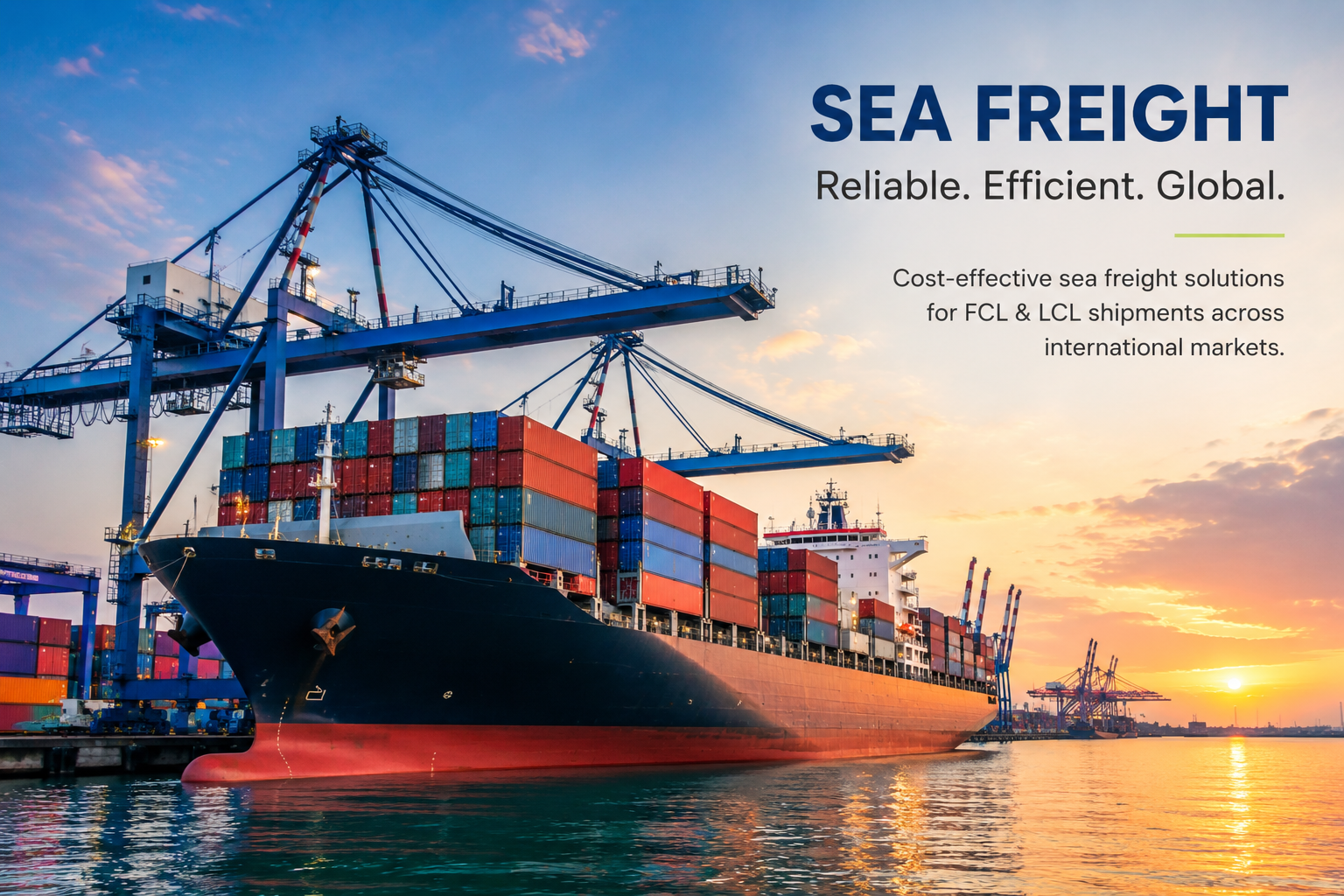
Sea freight involves transporting cargo between ports using container ships. Depending on the quantity and requirements of the shipment, businesses can choose between different container shipping options.
The two common options are FCL and LCL.
What Is FCL?
FCL (Full Container Load) means that a shipment uses an entire shipping container.
FCL can be suitable when:
- You have enough cargo to fill a container.
- Your shipment requires dedicated container space.
- You want greater control over your cargo.
- The shipment contains goods that should not be consolidated with other cargo.
What Is LCL?
LCL (Less than Container Load) allows multiple shipments to share the same container.
It can be useful when:
- Your shipment doesn’t require a full container.
- You want to ship smaller quantities internationally.
- You want to avoid paying for an entire container when your cargo volume is limited.
Benefits of Sea Freight
Suitable for Large Shipments
Sea freight can handle significant cargo volumes and heavy goods.
FCL & LCL Flexibility
Businesses can select a shipping option based on their cargo volume and requirements.
International Reach
Sea freight connects major ports and international markets around the world.
Suitable for Different Cargo Types
Containers can accommodate a wide variety of commercial and industrial goods.
What Should You Consider Before Shipping?
Before choosing sea freight, consider:
- Cargo volume and weight
- Origin and destination
- Required delivery timeline
- FCL or LCL requirements
- Documentation
- Customs requirements
- Cargo handling requirements
STRANS Sea Freight Solutions
STRANS provides sea freight solutions for both import and export requirements, including FCL and LCL shipments.
Our team coordinates the different stages of transportation to help businesses move their cargo efficiently across international markets.
Conclusion
Sea freight can be an effective choice for businesses that need to transport large quantities of goods internationally. Choosing between FCL and LCL depends primarily on your cargo volume, requirements and shipment objectives.
Planning an international shipment? Talk to STRANS about the right sea freight solution for your cargo.